Prenatal Medical Care
The importance of early prenatal medical care
As soon as you find out you are pregnant, work with your health care provider to set up a schedule of prenatal care. For pregnancies without major complications, prenatal exams are often scheduled as follows:
-
Every month from the 4th week through the 28th week.
-
Every 2 weeks from the 29th week through the 36th week.
-
Weekly from the 37th week until delivery.
This schedule may vary depending on your health and your provider's preference. You may need more prenatal care if you have a preexisting health problem, like diabetes. You may also need more care if problems come up during your pregnancy.
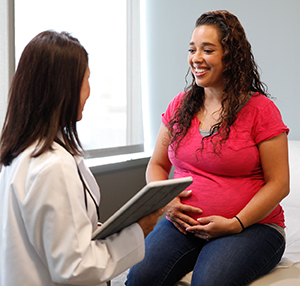
Who provides prenatal care?
Many health care providers can provide prenatal care, such as:
-
An obstetrician/gynecologist (OB/GYN). This doctor has special training in the care of people during pregnancy, labor, and delivery. An OB/GYN also focuses on many gynecological health issues.
-
A family physician. This doctor has special training in primary care, including obstetrics.
-
A nurse practitioner. This type of nurse has special training and can provide prenatal care. Nurse practitioners are certified by either the American Academy of Nurse Practitioners or the American Nurses Credentialing Center.
-
A certified nurse midwife (CNM). This type of nurse has additional training to care for people with low-risk pregnancies. Some midwives work with other health care providers, while some work on an independent basis. CNMs are certified by the American College of Nurse Midwives.
-
A perinatologist. This doctor specializes in high-risk pregnancies. They are also called maternal-fetal medicine specialists.
Obstetricians (and other doctors who specialize in maternal-fetal medicine, reproductive endocrinology, or infertility) are certified by the American Board of Obstetrics and Gynecology. Almost 2,000 obstetricians are certified every year.
What happens during prenatal care visits?
Prenatal care provides the best care for you during your pregnancy. It also helps prepare you for the delivery of a healthy baby. During prenatal visits, tests will be done to check for any possible risks and to treat any problems. Tests will also be done to keep an eye on your baby's growth and development. You'll also get counseling and guidance on many aspects of pregnancy. This includes weight gain, exercise, nutrition, and overall health. At a typical prenatal visit, you may have:
-
Your weight measured.
-
A blood pressure test.
-
The uterus measured to check your baby's growth.
-
A physical exam to find problems or discomforts, like swelling of the hands and feet.
-
A urine test to check sugar and protein levels. High levels can be a sign of diabetes or preeclampsia. Preeclampsia is a condition that causes high blood pressure, high protein levels, and swelling due to fluid retention. But swelling may not always be present. And having swelling does not always mean you have preeclampsia.
-
Fetal heart rate measurement.
-
Prenatal screening tests, such as blood tests to check for anemia.
Online Medical Reviewer:
Heather M Trevino BSN RNC
Online Medical Reviewer:
Janet Campbell RN BSN
Online Medical Reviewer:
Robyn Zercher FNP
Date Last Reviewed:
9/1/2025
© 2000-2026 The StayWell Company, LLC. All rights reserved. This information is not intended as a substitute for professional medical care. Always follow your healthcare professional's instructions.